
“Operate. Track. Improve. With Petra Business Suites, every part of your business moves forward — because what gets measured, gets mastered.”
Loading
“Operate. Track. Improve. With Petra Business Suites, every part of your business moves forward — because what gets measured, gets mastered.”

One of the biggest reasons projects lose momentum is not always poor planning. In many cases, the real issue is limited visibility.
When teams, managers, and stakeholders do not have a clear view of what is due, what is delayed, what is moving, and what needs attention next, project follow-up becomes reactive. Updates depend on manual check-ins, reminders happen too late, and small issues quietly become bigger delivery risks.
That is exactly the kind of challenge Petra is helping organisations address. Recent improvements to Petra Project Management are focused on making progress easier to see, follow-up easier to maintain, and reporting more practical for everyday use.
Project management should not rely on memory, scattered chats, or occasional status meetings. Teams need a working environment where progress is visible, deadlines are easier to monitor, and important work does not slip through unnoticed.
Petra is being improved to support a stronger reporting and follow-up rhythm, one that helps organisations spot risks earlier and respond faster. Instead of waiting until work becomes overdue before attention is given, teams can benefit from a more proactive view of delivery.
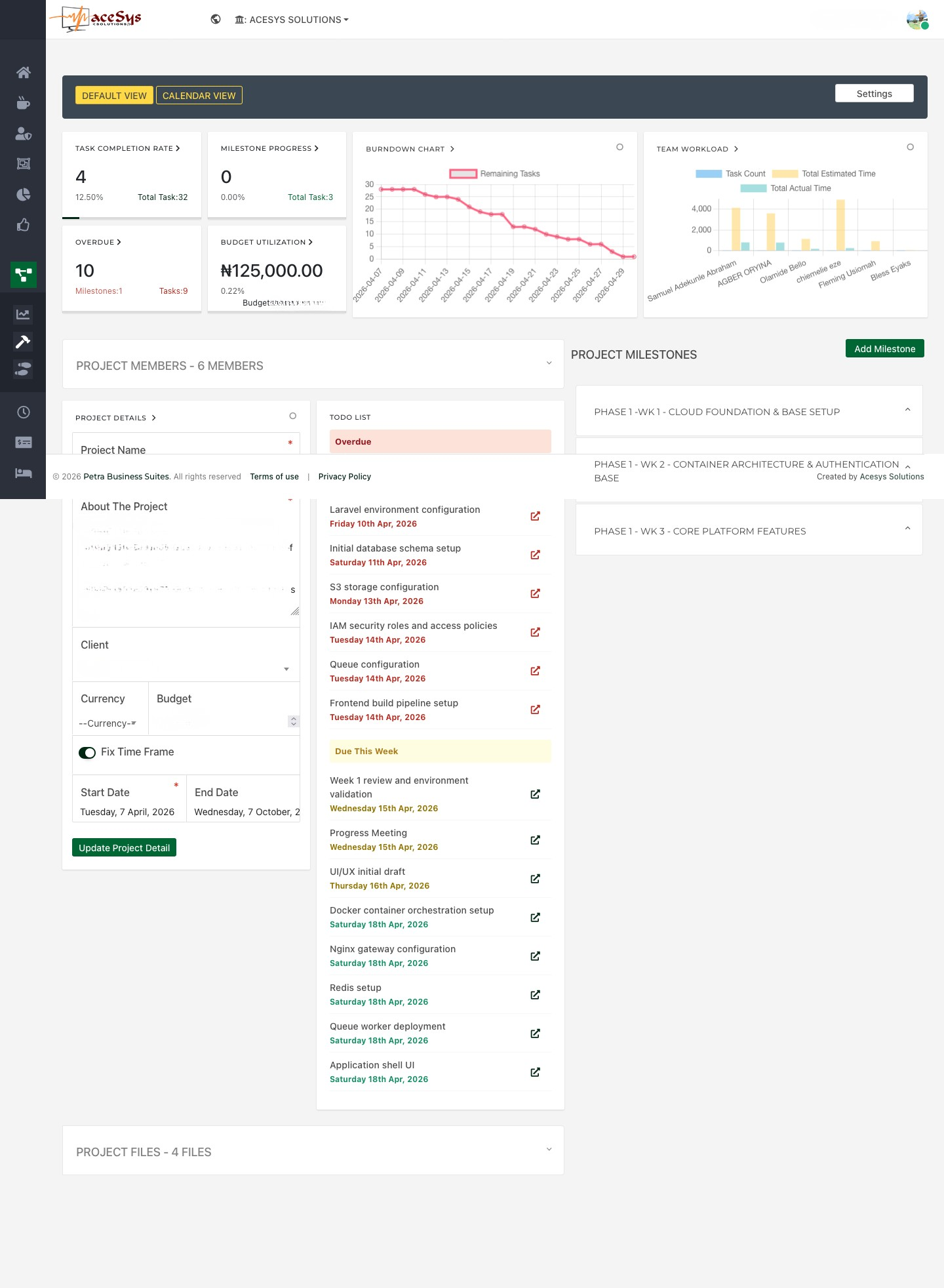
A clearer project dashboard helps managers understand progress, workload, overdue work, and milestone movement at a glance.
A strong project view should do more than list tasks. It should help decision-makers quickly understand the state of delivery.
Petra’s project dashboard experience brings key indicators together in one place, making it easier to interpret completion progress, overdue work, milestone status, workload patterns, and overall project structure. That means less time spent piecing updates together and more time responding to what actually matters.
When project data is easier to interpret, oversight becomes faster, more consistent, and more practical.
For many teams, one of the hardest things to maintain is a reliable sense of timing. It is easy to know what has been assigned, but much harder to stay aware of what is coming up next, what is at risk, and how work is distributed across the calendar.
That is why visual planning matters. By making project schedules easier to view in a calendar format, Petra helps teams understand how work is spread over time, spot overloaded periods, and identify upcoming deadlines more naturally.
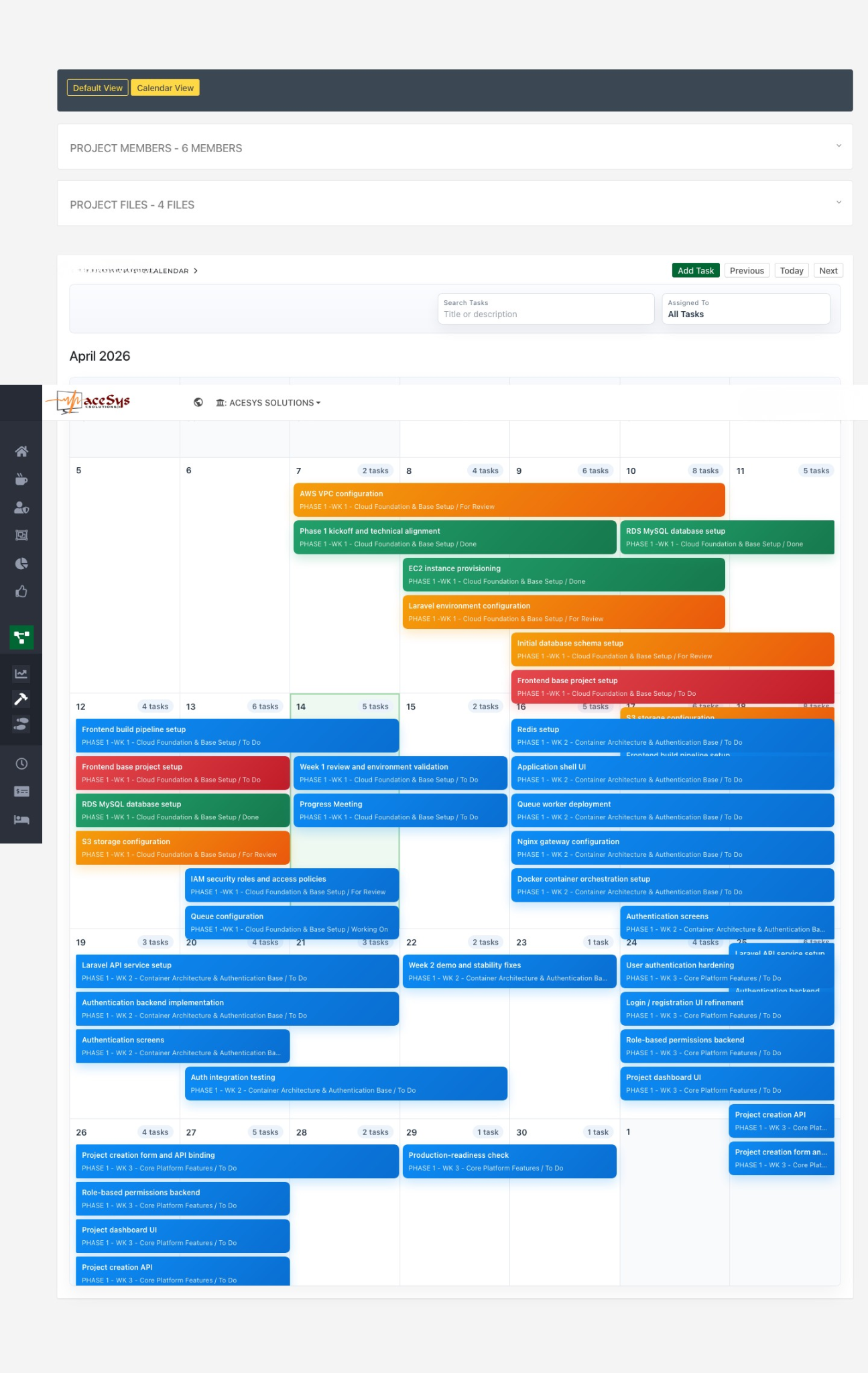
Calendar-based planning makes it easier to understand delivery rhythm, upcoming deadlines, and how work is spread across the month.
Visibility is not only about high-level reporting. It is also about being able to quickly see the condition of day-to-day work.
Petra’s task monitoring views help surface what needs attention now, not later. Due and overdue tasks become easier to identify, which is especially important for managers overseeing multiple projects or teams. A more structured task view also helps team members understand priorities more clearly.
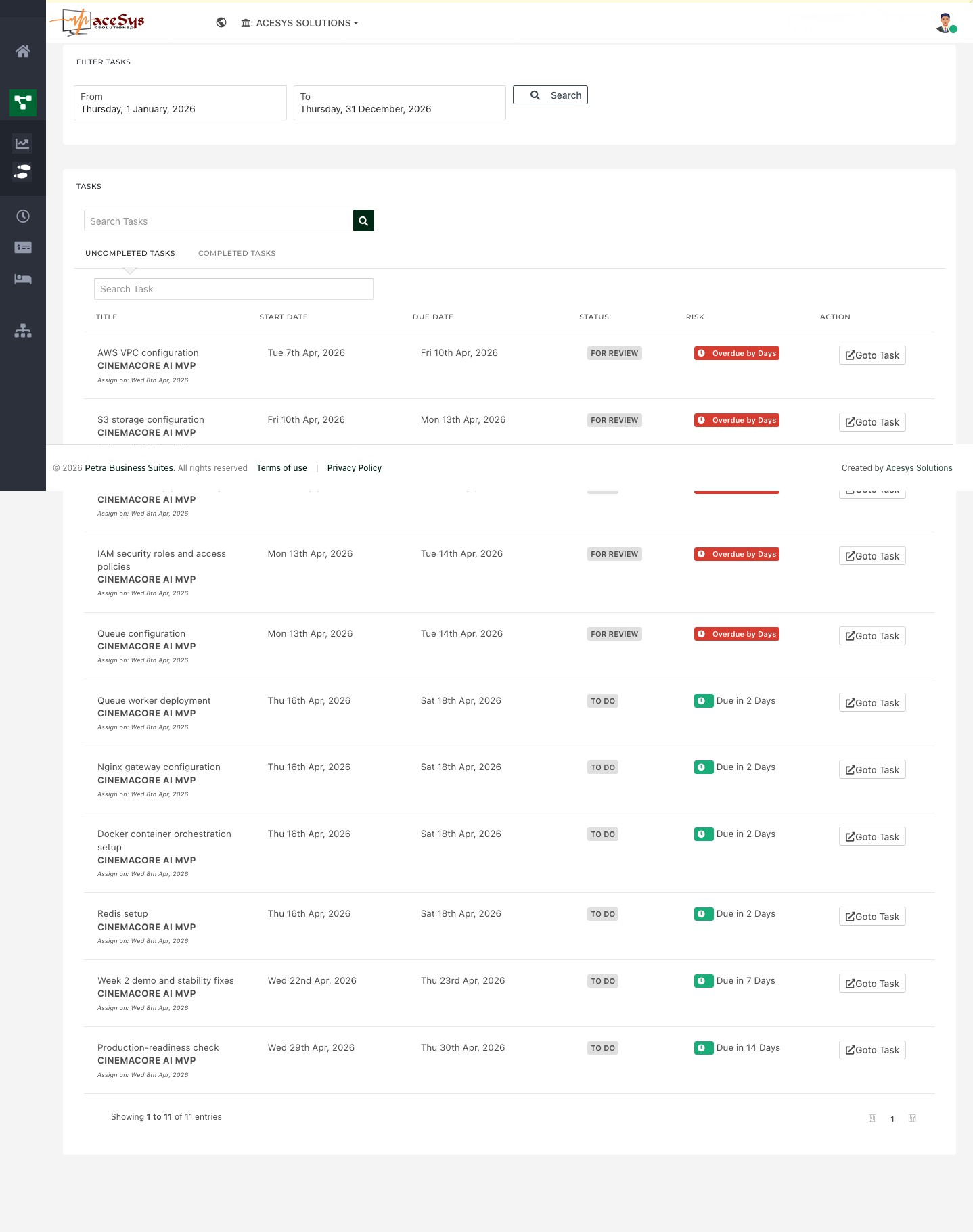
Due and overdue task views make it easier to identify delivery risks before they grow into bigger project issues.
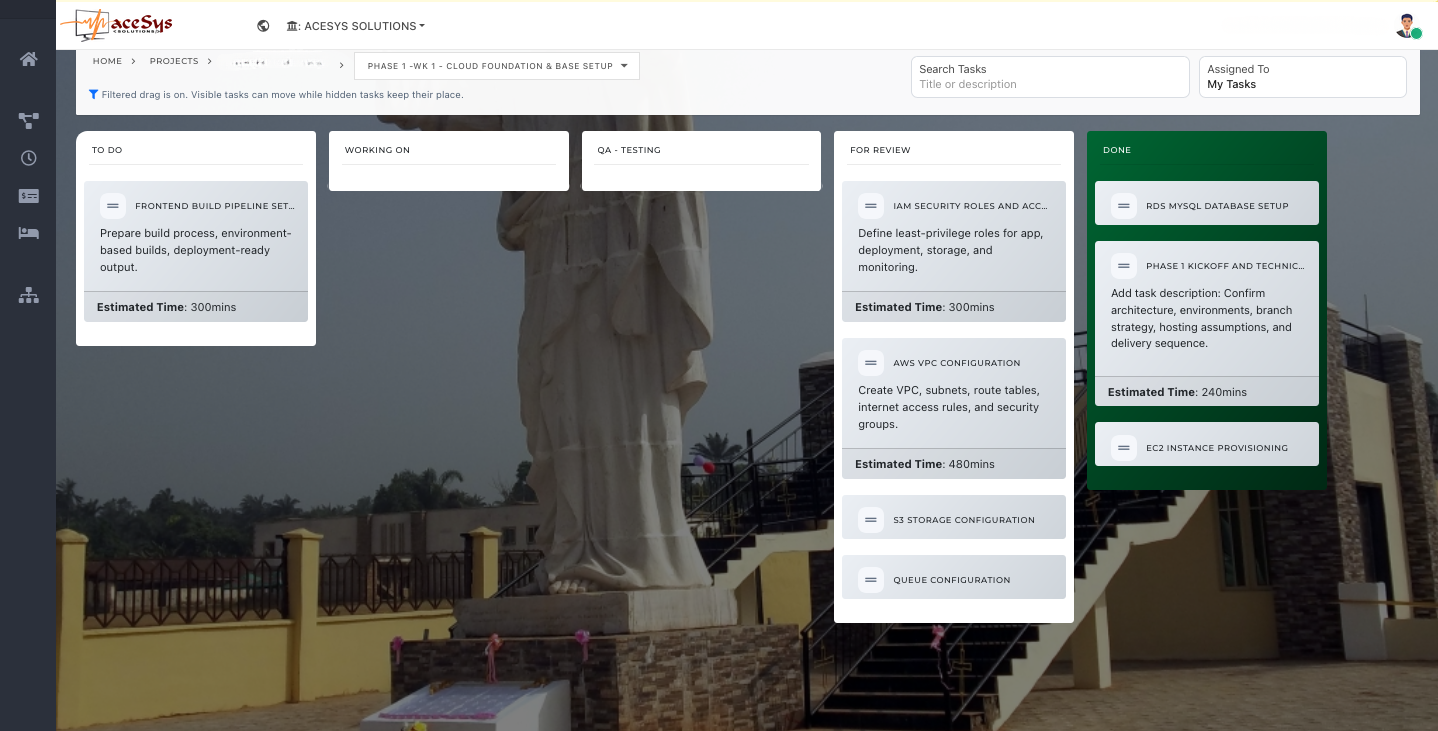
Kanban visibility helps teams understand what is in progress, under review, and already completed.
One of the most practical ways to improve follow-up is to improve reporting rhythm.
When reporting is too infrequent, important signals are missed. When it is too manual, consistency suffers. Petra is being refined to support more dependable weekly reporting, task schedules, and project summaries that help teams stay informed without relying on constant manual chasing.
Good reporting is not just about keeping records. It helps organisations identify delivery risks earlier, keep managers informed, support better planning conversations, and maintain momentum from week to week.
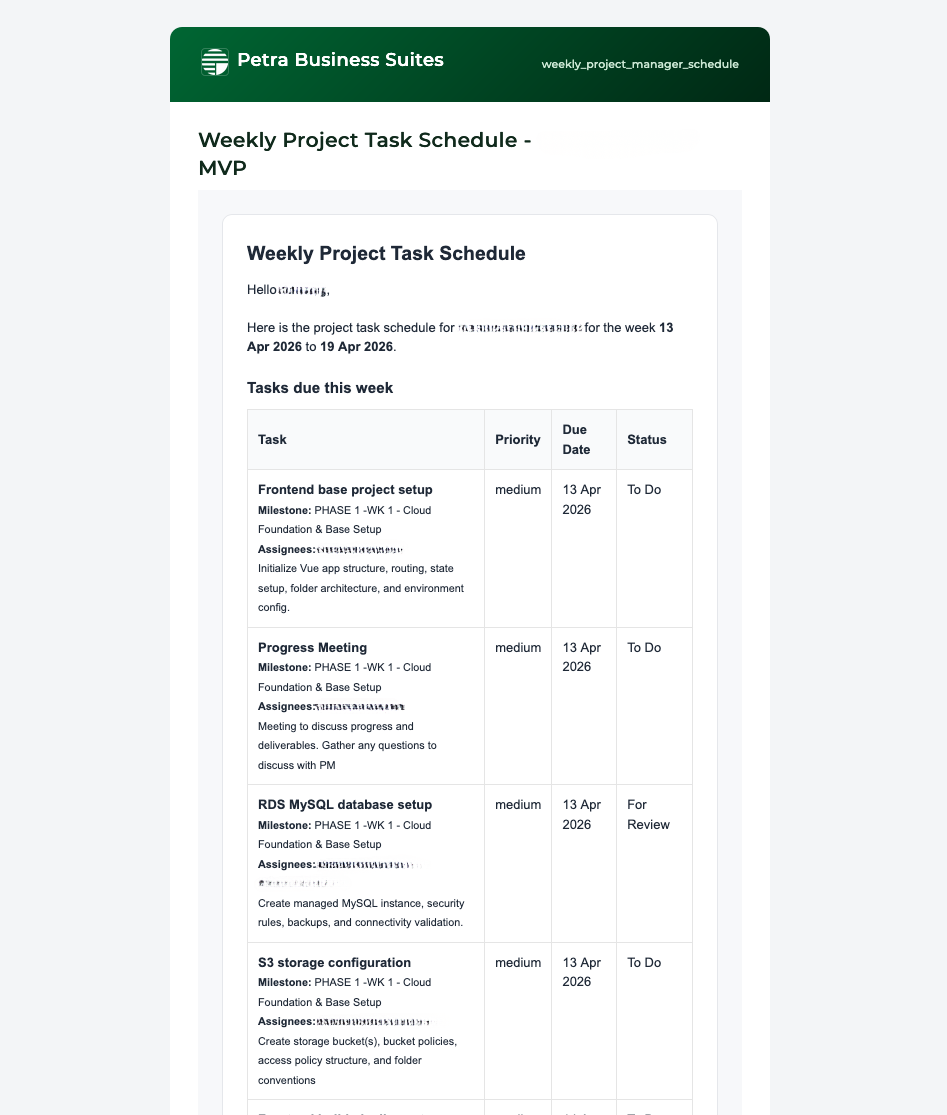
Weekly task schedule reports help teams and managers stay aligned on what needs attention in the current week.
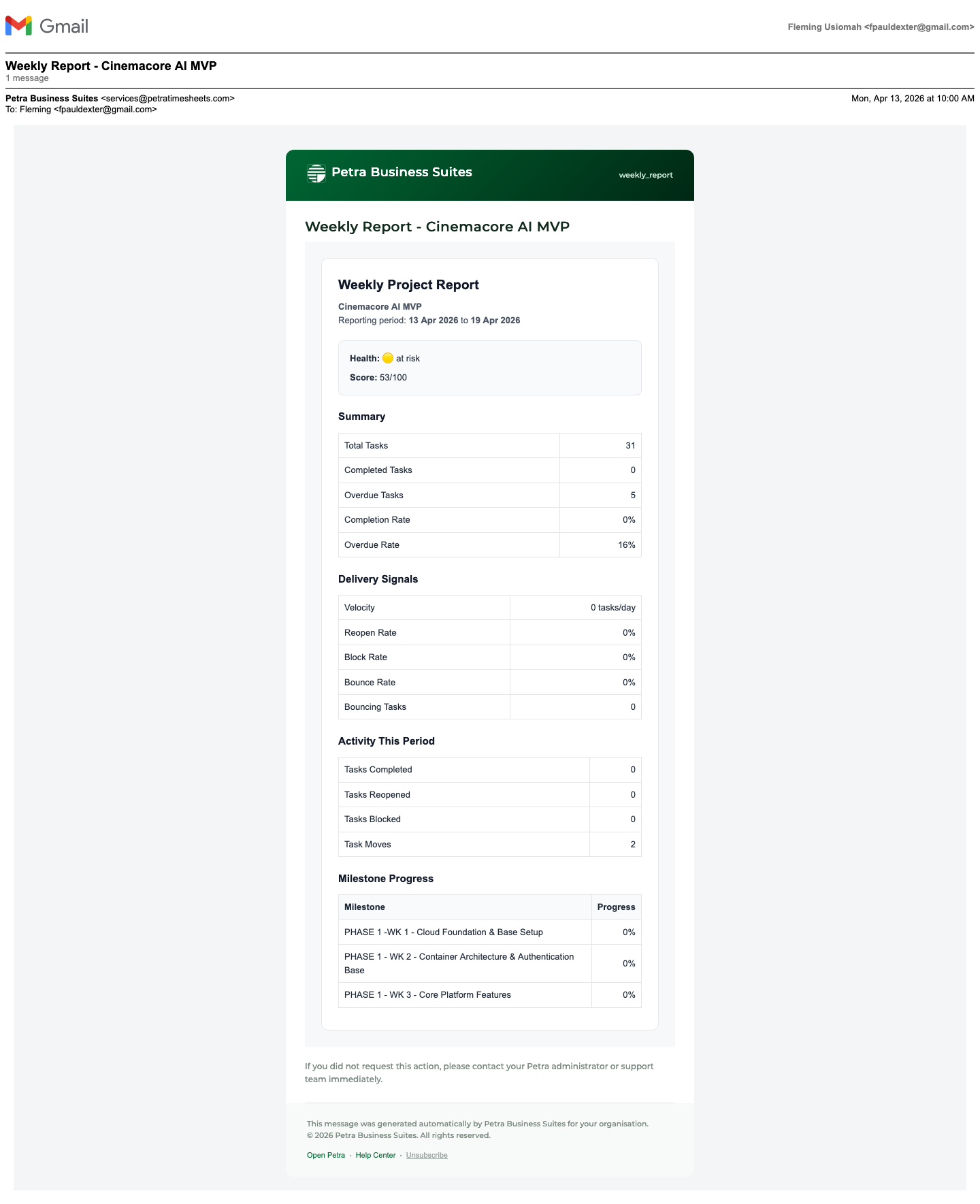
Project summary reports provide a structured snapshot of health, activity, overdue work, and milestone progress.
There is a direct relationship between visibility and accountability.
When work is easier to see, it is easier to manage. When deadlines are easier to monitor, follow-up becomes timelier. When reporting is more structured, conversations become more productive.
Petra’s ongoing improvements are helping create an environment where project execution is not hidden behind disconnected updates, but supported by clearer signals, better organisation, and more accessible oversight.
Project visibility is not only a concern for project managers. It affects delivery confidence across the organisation. Better visibility means fewer surprises, stronger follow-up habits, better coordination across teams, and clearer communication with stakeholders.
As Petra Project Management continues to evolve, this focus on visibility and follow-up is part of a broader goal: helping organisations manage work with more clarity, more structure, and less manual effort.
Strong delivery depends on more than assigning tasks. It depends on knowing what is happening, what needs attention, and what should happen next.
That is why improving visibility and follow-up is such an important step forward. With these ongoing improvements, Petra is becoming an even more practical project management environment for teams that want clearer oversight, better reporting rhythm, and a more proactive way to keep projects moving.

Book a walkthrough and we will show how Petra connects the ideas in this article to real work tracking.
Petra Support
Share your details so our team can keep the conversation connected if you come back later.