
“Operate. Track. Improve. With Petra Business Suites, every part of your business moves forward — because what gets measured, gets mastered.”
Loading
“Operate. Track. Improve. With Petra Business Suites, every part of your business moves forward — because what gets measured, gets mastered.”

One of the biggest operational gaps in many organisations is the disconnect between delivery and billing.
Teams complete project work, log effort, review activity, and move tasks forward, but when it is time to invoice, the commercial process often starts almost from scratch. Finance teams chase for context, delivery teams revisit completed work, and invoice preparation becomes slower and more manual than it should be.
Petra is helping close that gap by creating a more connected workflow between project delivery and invoicing. Instead of treating billing as a separate process detached from execution, Petra supports a more structured path from logged work to approved billable activity and finally to invoice generation.
A connected invoicing workflow starts with the work itself. Petra makes that possible by tying time entry more closely to the project environment, allowing billable activity to be recorded against the work being done rather than reconstructed later.
This matters because strong billing depends on strong operational records. When effort is linked directly to tasks and project context, organisations gain a clearer and more credible foundation for invoicing.
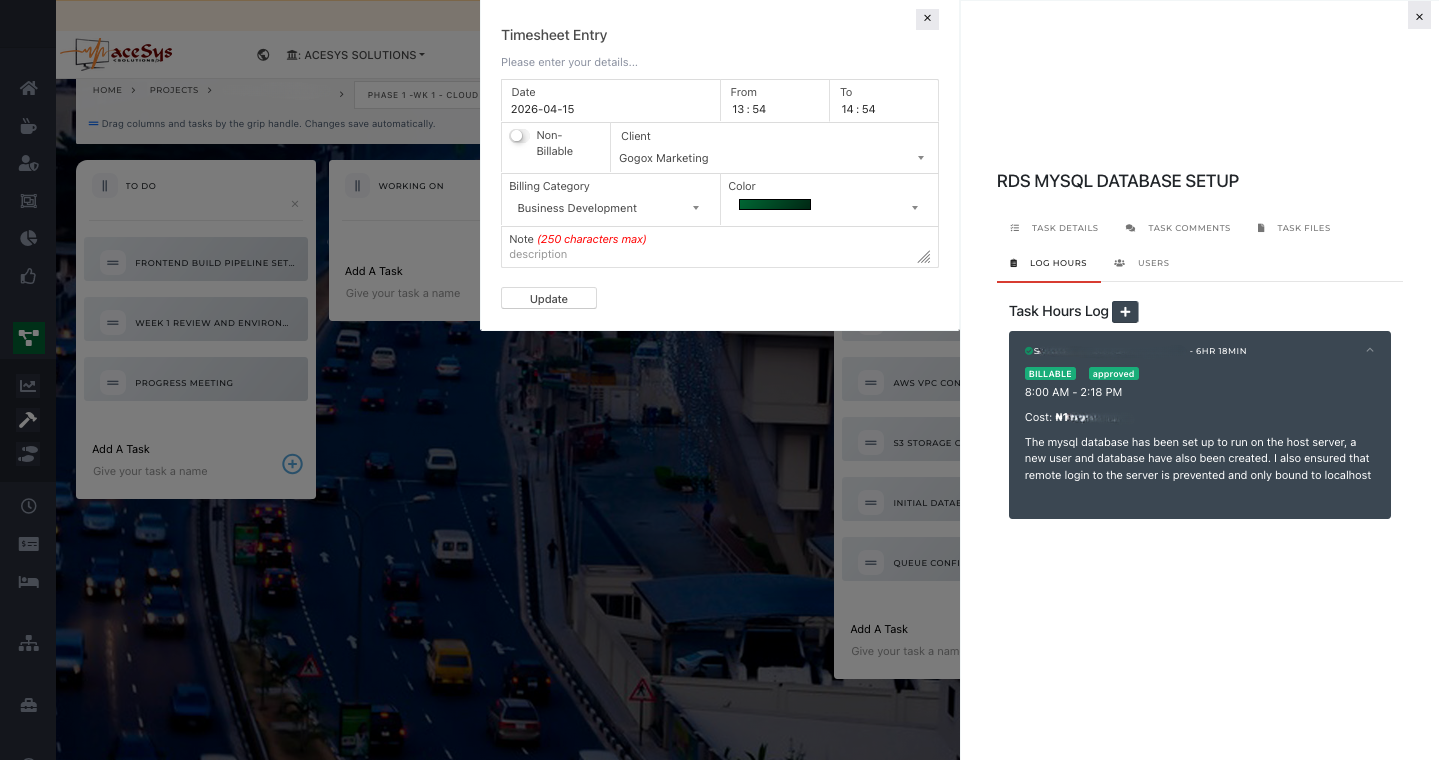
Petra helps connect billing to real project activity by supporting time entry directly within the task and delivery workflow.
Not every logged entry should move straight into invoicing. A more reliable workflow requires review and approval so that only valid, confirmed billable activity becomes part of the commercial process.
Petra supports this by making billable entries visible and reviewable before they are used for billing. This helps organisations maintain stronger control over what becomes invoiceable and reduces the chance of billing from incomplete, inaccurate, or unapproved work.
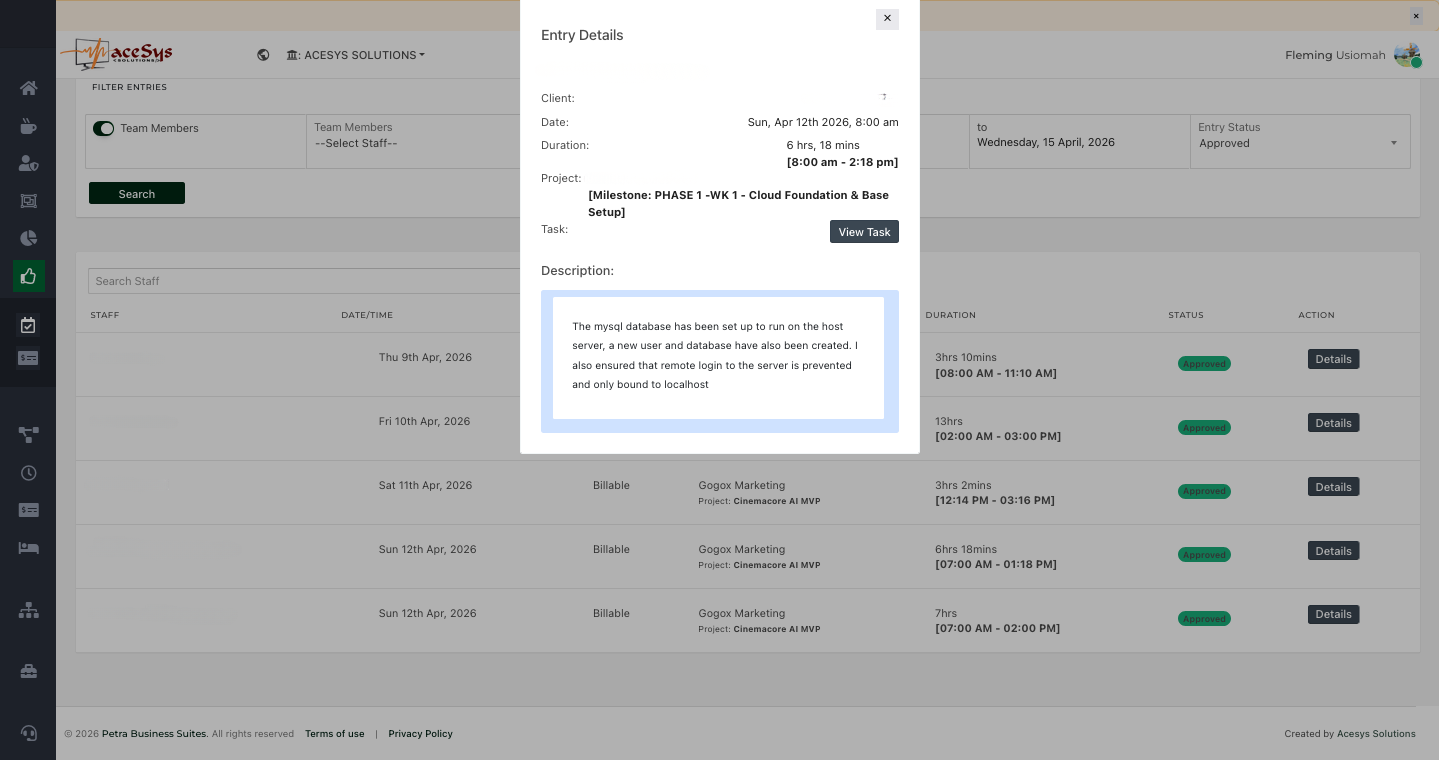
Approved billable entries create a more dependable operational foundation for invoice generation.
The real value of a connected workflow appears when approved project activity can move more naturally into invoicing. Instead of manually rebuilding invoice descriptions line by line, Petra helps organisations generate invoice items from completed, billable work.
This creates several advantages. It saves time, reduces duplication, improves traceability, and makes invoice preparation feel more like a continuation of project delivery rather than a separate administrative exercise.
It also means invoice items can reflect the actual work performed, including project context, milestone references, task descriptions, and billable quantities.
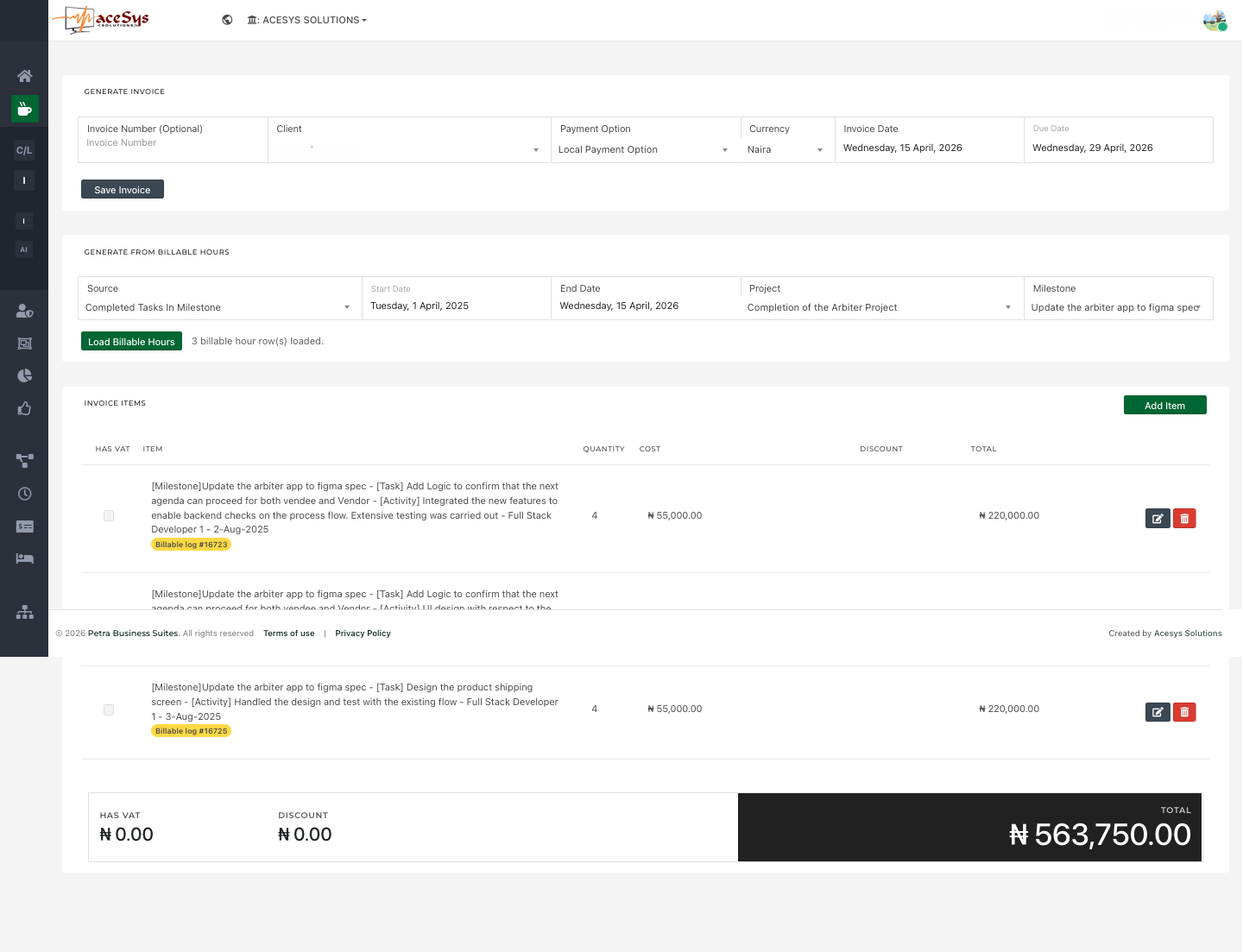
Petra helps convert approved billable work into structured invoice items, reducing manual billing effort and improving traceability.
A connected workflow should not stop at internal preparation. It should also help produce a cleaner final output for the client.
By carrying approved billable activity through to invoice generation, Petra helps organisations move more smoothly from operational execution to commercial presentation. That means invoices are easier to prepare, easier to validate, and more clearly connected to the work that has actually been delivered.
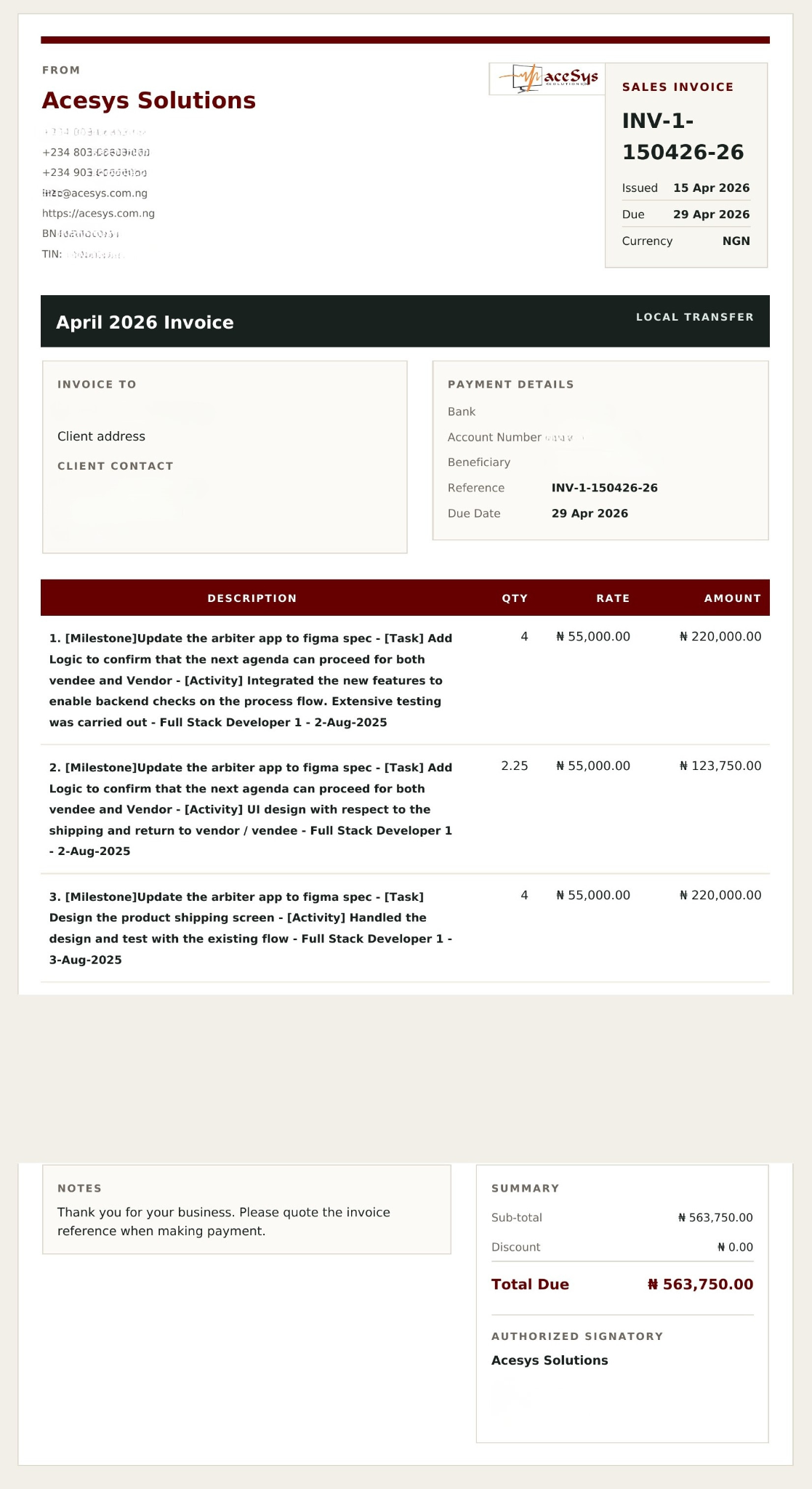
A more connected workflow leads to clearer, more structured, and more professional invoice output.
When delivery and billing are disconnected, organisations lose time and introduce avoidable friction. Teams repeat work, finance staff spend extra time verifying context, and the path from completed delivery to payment becomes slower than necessary.
A more connected workflow helps solve that. It allows organisations to move from execution to billing with better continuity, stronger records, and less manual reconstruction of what was done.
As organisations grow, one of the most important workflow improvements they can make is reducing the handoff friction between the teams doing the work and the teams responsible for billing it. Petra supports that by giving project activity a more natural path into the invoicing process.
That does not just improve efficiency. It improves confidence. Delivery teams can trust that recorded work is easier to bill correctly, and finance teams can trust that invoice items are grounded in actual, approved project activity.
Project delivery and invoicing should not feel like separate worlds. The stronger the connection between execution and billing, the easier it becomes for organisations to maintain accuracy, reduce administrative friction, and move more smoothly from completed work to commercial follow-through.
That is where Petra is creating value. By helping organisations move from logged project work to approved billable activity and on to invoice generation, Petra supports a more connected workflow that is both operationally practical and commercially stronger.

Book a walkthrough and we will show how Petra connects the ideas in this article to real work tracking.
Petra Support
Share your details so our team can keep the conversation connected if you come back later.