
How to connect offers, outreach, follow-up, content, delivery, reviews and referrals—and put the system into practice during Petra's 90-Day Guided Pilot.
Source and inspiration
This article is an independent Petra Business Suites interpretation of ideas discussed in the Instantly video Alex Hormozi's Lead Generation Strategy. The video analyses principles associated with Alex Hormozi's public business content. Petra Business Suites is not affiliated with or endorsed by Alex Hormozi, Acquisition.com or Instantly.
Monday morning. Your sales team has names in spreadsheets, conversations in personal inboxes, follow-up dates in people's heads and a handful of promising prospects buried somewhere in WhatsApp or LinkedIn.
Everyone is busy. Yet nobody can confidently answer the questions that matter: Who should we contact today? Which message is working? Where are opportunities getting stuck? Which customers are sending referrals? When did we last ask a satisfied customer for a review?
That is not always a lead shortage. Often, it is a systems problem.
The lead-generation framework explored in the source video makes a useful argument: sustainable growth is less about repeatedly chasing strangers and more about building a self-reinforcing system. A clear offer creates conversations. Consistent follow-up creates customers. Strong delivery creates proof. That proof—shared through content, reviews and referrals—helps create the next wave of better leads.
Petra Business Suites helps an organisation turn that framework into visible, repeatable work.
The real goal is a loop, not a list
Clear offer → Relevant outreach → Consistent follow-up → New customer → Strong delivery → Reviews, referrals and proof → Better leads
A contact list is useful, but a growth loop is more valuable because each successful stage strengthens the next one.
The framework can be reduced to five practical principles:
- Build a system in which a well-served customer can help create the next customer.
- Lead with useful value instead of immediately demanding a meeting or sale.
- Take ownership of the numbers rather than blaming the market without evidence.
- Use processes, content, people and appropriate automation to move beyond purely linear growth.
- Connect three outcomes: attract suitable leads, serve customers exceptionally well, and turn customer success into trusted proof and referrals.
Here is how an organisation can put those principles to work with Petra.
1. Start with an offer worth answering
No volume of email, calls or direct messages can rescue an offer that the right customer does not understand or value.
The value framework discussed in the video asks four useful questions:
- What result does the customer truly want?
- Why should the customer believe you can deliver it?
- How quickly can the customer experience meaningful value?
- How much effort, risk or disruption must the customer accept?
Your organisation must supply the real expertise, evidence and promise. Petra's role is to help the team turn the approved offer into consistent execution. The message can be reflected in lead notes, call scripts, email templates, campaign content, follow-up tasks and the customer record, rather than remaining an idea known only to one salesperson.
Where Petra's AI-assisted tools are enabled, generated follow-up or campaign suggestions should be treated as drafts. A team member should review the claims, tone, dates, audience and next step before anything is used.
2. Turn scattered contacts into an organised opportunity base
The source video begins with the lowest-hanging opportunity: warm outreach. Your next customer may already be in a founder's phone, a colleague's network, an old enquiry list, a newsletter audience or a former customer's contacts.
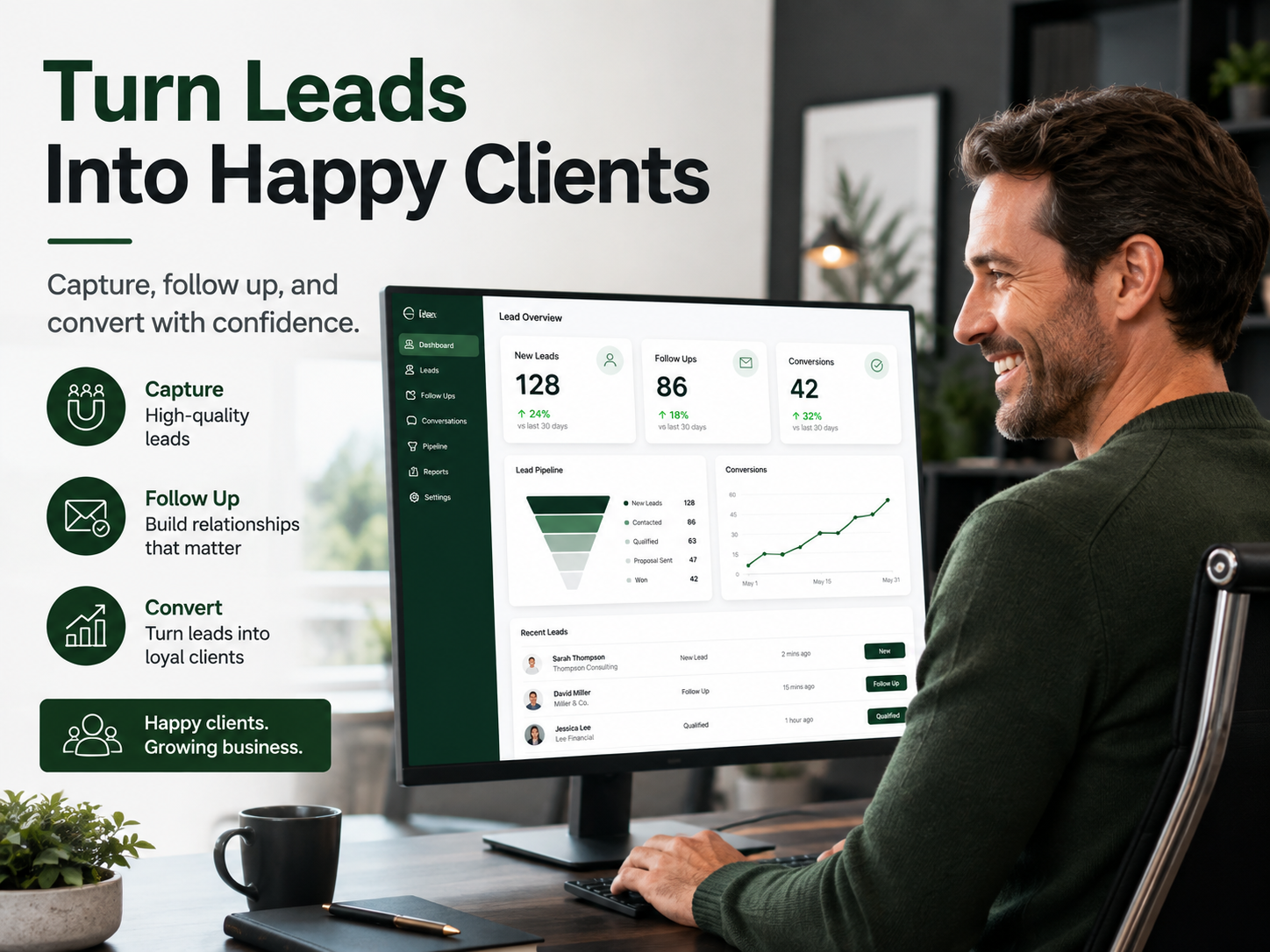
Petra helps the team bring those relationships into one CRM workspace. Leads can be assigned to owners, placed in a pipeline and tagged with their source, such as an existing relationship, content, cold outreach, paid advertising or a customer referral. Recording both the broad channel and the detailed source makes later analysis more useful.
Existing records can be imported, mapped, reviewed, deduplicated and merged so the team does not end up with several incomplete versions of the same relationship.
Petra begins after an organisation has responsibly acquired or received the contact data. It is not a list broker or web-scraping service. Every organisation remains responsible for lawful data collection, relevant targeting, consent where required, accurate sender identification and prompt handling of opt-out choices.
3. Make warm outreach a daily operating rhythm
Warm outreach works because some trust already exists. It still fails when the team relies on memory, sends one message and forgets to record what happened.
In Petra, due and overdue follow-up work can be organised around the lead, owner, pipeline stage and next action. A team member can work through calls, emails, meetings and other touches while recording the outcome, note and next step against the same relationship.
Reusable scripts help the organisation preserve a strong structure without forcing every conversation to sound identical. The salesperson can personalise the opening, refer to the real context of the relationship and offer a useful next step.
This turns outreach into visible, coachable work. A manager can see whether the problem is activity, targeting, messaging, qualification, follow-up or the offer itself.
4. Scale cold outreach without making it careless
The cold-outreach framework can be expressed through three questions:
- Who should we contact?
- What should we say?
- How do we create enough quality opportunities without rebuilding the process every day?
Petra helps once the organisation has lawfully assembled a relevant audience. Using the lead, source, ownership, stage and other qualifying information already stored in the CRM, the team can create a focused campaign instead of sending the same message to everyone.
The campaign workflow can support reusable email designs and templates, personalisation, scheduling, recipient management, engagement tracking and unsubscribe handling. The goal is not to automate carelessness. It is to make a thoughtful process repeatable.
A strong cold message should quickly demonstrate relevance, present a credible outcome, reduce uncertainty and give the recipient something useful before demanding a large commitment. That useful value might be a short assessment, a relevant guide, a practical observation, a comparison, a checklist or a clearly defined pilot.
Automation should increase consistency, not reduce empathy.
5. Follow up more often—and in more useful ways
Many opportunities do not disappear because the buyer gave a final “no.” They disappear because nobody followed up at the right time, with the right context or through a useful next step.
Petra's cadence, workflow and follow-up tools can turn a successful sequence into a repeatable operating plan. For example:
- Day 0: Make a personal call or send a tailored message to understand the problem.
- Day 2: Send a relevant guide, example or short assessment.
- Day 5: Address a likely concern or clarify the expected outcome.
- Day 9: Follow up with a clear and low-friction next step.
- Day 14: Send a respectful final message and leave the door open.
The sequence should change when the prospect replies. Automation is useful for reminders and approved messages, but a real response should move the relationship back into a real conversation.
Campaign and CRM activity also gives the team evidence. Opens can be imperfect indicators, so clicks, replies, booked conversations, qualified opportunities and conversions usually deserve more attention than an open count on its own.
6. Use content as the trust layer around outreach
This is one of the most important ideas to strengthen from the source video. Outreach creates a direct opportunity, but content helps the prospect decide whether the sender is credible.
Short-form content can create reach and repeated visibility. Long-form content can teach, answer objections and allow a prospect to understand how the organisation thinks before speaking with a salesperson. Case studies, reviews, demonstrations and customer stories provide proof that supports both warm and cold outreach.
Content also gives follow-up a useful purpose. Instead of repeatedly asking, “Have you decided?”, the team can share a relevant article, checklist, example, video or customer result that helps the prospect make a better decision.
Petra is not intended to replace a dedicated social-media publishing platform. Its role is to help the team preserve the source of a lead, store customer proof, use that proof responsibly in campaigns, and connect engagement to a tracked follow-up process.
Content is a long game. Consistency matters more than one post that happens to perform well.
7. Replace opinions with a measurable sales process
“The market is slow” is not a complete diagnosis.
Petra's CRM dashboards, pipeline information, scorecards, campaign analytics and ownership views help managers examine what is actually happening. Useful questions include:
- Which sources are producing qualified opportunities and customers?
- Where are leads spending too long in the pipeline?
- Which follow-up steps are being completed or missed?
- Which messages are producing replies, clicks, meetings or conversions?
- Which owners have too many opportunities or too little activity?
- Why are opportunities being lost?
- Which customers are creating reviews, referrals or repeat work?
This is practical ownership: inspect the audience, offer, message, channel, cadence, qualification and follow-through, then improve the weakest link.
8. Win the customer—and keep the promise
Lead generation is not complete when a deal is marked “won.” That is where reputation begins.
When a qualified relationship becomes a customer, Petra can connect the CRM history to the wider operating work. Projects, milestones, Kanban boards, tasks, assignments, comments, files and calendars help the delivery team understand what must happen.
Time and cost tracking, cost quotations, invoicing, recurring schedules, receipts and reporting help the organisation connect the promise made during sales to the work delivered and the money collected.
That continuity matters. Sales can see what was promised. Delivery can see what must be completed. Finance can see what was billed and received. Leadership can see whether growth is creating healthy, profitable work or merely creating more activity.
9. Turn customer success into the next high-quality lead
This is where the growth loop closes.
After a customer has experienced meaningful value, the team should make reviews and referrals part of the post-delivery workflow. The timing should be based on a real result—not simply on the number of days since the sale.
Petra can help the organisation preserve customer reviews, testimonials, relationship history and referral sources. A referred lead can be connected to the customer or partner who introduced the opportunity, allowing the team to understand which relationships are creating valuable growth.
A practical compounding process is:
- Deliver a result worth talking about.
- Capture the customer's words accurately and obtain permission to use them.
- Ask for a relevant introduction at the right moment.
- Reuse the proof ethically in content, campaigns and sales conversations.
- Measure whether referred and content-led opportunities convert differently from other sources.
Put the framework into practice with Petra's 90-Day Guided Pilot
Knowing the framework is not the same as making it part of the team's daily work. A CRM can store the process, but the organisation still has to make decisions about its offer, pipeline, ownership, messages, follow-up rhythm, reporting and customer handover.
Petra's 90-Day Guided Pilot gives selected organisations full access for 90 days, guided setup and a structured opportunity to test Petra without a credit card. In return, participating teams are asked to share practical feedback that helps us improve the product.
The exact setup priorities depend on the organisation's most important work problem. For a team using the pilot to improve lead generation and customer follow-up, a practical way to use the 90 days is:
Days 1–30: Build the foundation
- Clarify the ideal customer, commercial offer and desired next step.
- Import, clean, map, deduplicate and organise existing lead data.
- Define pipeline stages, lead sources, ownership and responsibility.
- Prepare the first scripts, templates and follow-up structure.
- Configure the relevant CRM email and campaign settings.
Days 31–60: Establish the operating rhythm
- Work through due outreach and follow-up consistently.
- Build practical cadences and workflow rules for common lead stages.
- Launch a focused campaign to a relevant audience.
- Record replies, outcomes, lost reasons and next actions.
- Help managers review adoption and remove process bottlenecks.
Days 61–90: Learn, improve and compound
- Review source quality, pipeline movement, campaign response and conversion evidence.
- Improve the offer, audience, messages or cadence where the data is weak.
- Strengthen the handover from sales to projects, time tracking and invoicing.
- Create a repeatable review and referral process for satisfied customers.
- Agree on the next operating priorities after the guided period.
The pilot does not guarantee a particular number of leads or sales. Results still depend on the organisation's offer, audience, reputation, delivery, team participation, data quality and market conditions. The pilot provides full product access, guided setup and a clearer environment in which the team can test its process and see what should be improved.
Ready to build the system with guidance?
Apply for Petra's 90-Day Guided Pilot and let us help your team organise the journey from first contact to follow-up, delivery, reviews and referrals.
Growth should not depend on who remembered to follow up
The most useful lesson in the source video is not simply “send more emails.” It is to build a system in which each useful action makes the next useful action easier.
Petra gives that system a home. It connects lead sources, ownership, outreach, scripts, campaigns, follow-up, pipeline measurement, project delivery, time tracking, invoicing, reviews and referrals. Instead of managing every stage in a disconnected tool or in one person's memory, the organisation can see more of the commercial journey—from first contact to completed work, and from a satisfied customer to the next trusted introduction.
The question is no longer only, “Where will our next lead come from?”
It becomes, “How well is our growth engine working today—and what will we improve next?”
Editorial and product note: This article is an independent interpretation of the linked Instantly video and does not imply sponsorship, partnership or endorsement by Alex Hormozi, Acquisition.com or Instantly. Petra feature availability depends on the organisation's subscription, permissions, configuration and any enabled AI capabilities. Organisations remain responsible for truthful offers, appropriate consent, lawful data use, accurate campaign content, privacy compliance and honouring unsubscribe requests.